The Curious Case of "Programme Nucléaire Iran": When Search Engines Go Astray
Searching for information on critical geopolitical topics is often a straightforward affair, yielding a wealth of articles, reports, and analyses. However, a surprising quirk in the digital landscape can occasionally send researchers down an unexpected rabbit hole. Imagine typing "
programme nucléaire iran" – a phrase referring to one of the most sensitive and debated international issues of our time – and being met with a slew of results detailing television schedules. This seemingly bizarre outcome is a testament to the complexities of natural language processing and keyword ambiguity, particularly when dealing with multilingual searches.
The French term "programme" can mean a 'plan' or 'program' in a general sense, but it's also commonly used to denote a 'schedule' or 'TV guide.' Thus, when search engines encounter "programme nucléaire iran," they might sometimes misinterpret "programme" as referring to a schedule, especially if "programme TV" is a highly indexed and frequently searched term in the French-speaking internet. The initial frustration of finding "Programme TNT : toutes les chaînes du programme TV TNT" or "Programme TV Free soirée du dimanche 8 février 2026" instead of comprehensive reports on proliferation, sanctions, or international diplomacy highlights a significant hurdle for those genuinely seeking to understand Iran's nuclear ambitions. This initial misdirection underscores the importance of refining search strategies and understanding the nuances of how information is indexed online, especially for topics as crucial as the
programme nucléaire iran.
Understanding the Iran Nuclear Program: A Geopolitical Lifeline
Beyond the initial search engine confusion, the actual
programme nucléaire iran is a subject of profound international importance, carrying significant implications for global security, regional stability, and energy policy. Iran's nuclear journey began in the 1950s under the Shah, with assistance from the United States as part of the Atoms for Peace program. After the 1979 Islamic Revolution, the program continued, albeit with periods of reduced activity and increased secrecy, eventually leading to heightened international scrutiny in the early 2000s.
At its core, the program involves several key components:
- Uranium Enrichment: Iran has developed capabilities to enrich uranium, a process crucial for both nuclear power generation and, at higher enrichments, for weapons-grade material. The centrifuges at facilities like Natanz and Fordow are central to this aspect.
- Heavy Water Reactor: The Arak heavy water reactor project, designed to produce plutonium (another potential fissile material), has also been a focal point of international concern.
- Missile Development: While not strictly part of the nuclear program itself, Iran's development of ballistic missiles capable of delivering a payload has often been linked by critics to its nuclear ambitions, raising proliferation concerns.
- International Oversight: The International Atomic Energy Agency (IAEA) plays a crucial role in monitoring Iran's nuclear activities, though the extent of its access has been a recurring point of contention.
The international community, particularly the UN Security Council P5+1 nations, has long expressed concerns that Iran's stated peaceful nuclear energy program could potentially be diverted towards developing nuclear weapons. This fear culminated in the 2015 Joint Comprehensive Plan of Action (JCPOA), an agreement that imposed significant restrictions on Iran's nuclear activities in exchange for sanctions relief. The future of this agreement, and indeed the entire
programme nucléaire iran, remains a complex and evolving challenge on the global stage.
Challenges in Data Retrieval: Beyond the TV Guide Muddle
Even when bypassing the initial search engine misdirections and successfully zeroing in on the actual
programme nucléaire iran, researchers face a myriad of challenges in obtaining accurate, comprehensive, and unbiased information. This isn't merely a matter of technical search terms; it delves into the opaque world of international relations, classified intelligence, and state secrecy.
One of the primary difficulties stems from the inherent secrecy surrounding any nation's sensitive defense or strategic programs. Information released by the Iranian government often emphasizes the peaceful nature of its nuclear ambitions, focusing on energy independence and medical applications. Conversely, Western governments and intelligence agencies frequently highlight concerns about proliferation risks, clandestine activities, and potential military dimensions. This creates a deeply polarized information environment where discerning objective facts from political narratives is arduous.
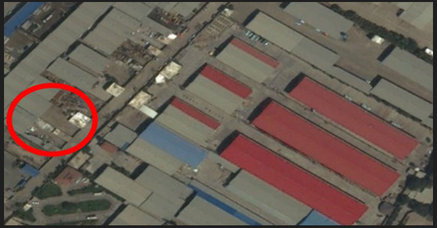
Moreover, access for international inspectors from the IAEA has been a consistent point of contention. While the JCPOA provided unprecedented levels of access and monitoring, its partial collapse and subsequent Iranian actions have limited the IAEA's oversight capabilities, leading to gaps in knowledge about the program's real-time status. Think tanks, non-governmental organizations, and academic institutions strive to fill these informational voids through analysis of satellite imagery, open-source intelligence, and expert consultations. However, their conclusions are often inferential and subject to debate.
Furthermore, geopolitical tensions and the imposition of sanctions significantly complicate the flow of information. Sanctions not only restrict financial transactions but also limit scientific and technical exchanges, making it harder for external observers to gauge the true technological advancements and challenges faced by the
programme nucléaire iran. This environment of mistrust and restricted access inevitably leads to a fragmented and often incomplete understanding of the program's true scope and intent. To understand why web searches for critical information might still miss key details, even when you're past the TV guide issue, delve into
Iran Nuclear Program: Why Web Searches Miss Key Details.
Navigating the Digital Landscape: Effective Search Strategies for Iran's Nuclear Ambitions
Given the complexities, how can an interested individual or researcher effectively navigate the digital landscape to find reliable information about the
programme nucléaire iran? The key lies in strategic searching, critical evaluation, and diversifying sources.
Smart Search Terms and Techniques:
- Specificity is Key: Instead of vague terms, use precise phrases. Examples include "Iran nuclear deal," "JCPOA status," "IAEA Iran report," "uranium enrichment Iran," "Iran centrifuges," or "Iran ballistic missile program."
- Language Matters: While the primary keyword is French, consider searching in English as well, using terms like "Iran nuclear program" or "Iranian nuclear ambition." Sometimes adding "news," "analysis," or "report" can filter out irrelevant results.
- Boolean Operators: Use "AND," "OR," "NOT" to refine your searches. For instance, "Iran nuclear program AND IAEA NOT TV guide."
- Site-Specific Searches: If you know a reputable source, use `site:domain.com` to search only within that website (e.g., `site:iaea.org Iran nuclear`).
Identifying Credible Sources:
The internet is awash with information, but not all of it is reliable. For a topic as sensitive as the
programme nucléaire iran, relying on reputable sources is paramount.
- Official International Bodies: The IAEA (International Atomic Energy Agency) is the primary international body responsible for monitoring nuclear activities. Their official reports are invaluable.
- Government Reports: White papers and statements from the UN, US State Department, European Union, and other involved nations offer official perspectives.
- Reputable Think Tanks and Research Institutions: Organizations like the Carnegie Endowment for International Peace, International Crisis Group, Institute for Science and International Security (ISIS), and Council on Foreign Relations provide in-depth analysis from experts.
- Established News Agencies: Major news outlets with dedicated foreign policy desks (e.g., Reuters, Associated Press, BBC, New York Times, The Guardian) provide timely and generally well-vetted reporting. Be cautious of partisan news sources.
- Academic Journals: Peer-reviewed articles offer rigorous analysis, though they might be less timely than news reports.
Critical Evaluation:
Always question the information you find. Consider the source's agenda, the recency of the information, and whether the claims are backed by evidence. Look for corroboration from multiple, independent sources. As we've seen, initial searches for "
programme nucléaire iran" can be misleading, underscoring the broader lesson that web searches can sometimes bring up unexpected results like TV guides instead of pertinent news. Learn more about this phenomenon and how to overcome it in
Searching Iran Nuclear Program: TV Guides Emerge, Not News.
The Future of Iran's Nuclear Stance: Diplomacy, Deterrence, and Data
The trajectory of the
programme nucléaire iran remains one of the most unpredictable yet crucial elements of future global stability. With the JCPOA in limbo and ongoing tensions in the Middle East, the world watches closely as Iran continues to advance its nuclear capabilities, albeit within varying degrees of international oversight. The coming years will likely be defined by a delicate balance between diplomatic efforts to revive and strengthen nuclear agreements, strategic deterrence from regional and global powers, and the relentless pursuit of accurate data to inform these complex policy decisions. The ability to monitor, verify, and understand Iran's nuclear activities will be critical for preventing proliferation and maintaining peace.
Conclusion
What began as a surprising encounter with TV schedules when searching for "
programme nucléaire iran" ultimately leads to a deeper understanding of digital search complexities and the profound geopolitical significance of Iran's nuclear program. This journey from digital misdirection to informed insight highlights the necessity of sophisticated search strategies and critical information evaluation. As the world grapples with the intricate challenges posed by Iran's nuclear ambitions, access to accurate, reliable, and comprehensive data remains paramount. By refining our search techniques and judiciously selecting our sources, we can move beyond mere program listings to genuinely uncover the vital details that shape international policy and global security.